



liz-oderaliz-odera
  • Home
  • About
  • Services
    • Tennis Consulting

      Strategic Planning

      Sport and Dev Ambassador

      Project Management

      Change Management

      Motivational Speaking

  • Appointment Calendar
  • Success Stories
  • Blogs
    • Blogs
    • Blog
    • Life
  • Events
Liz Odera Liz Odera
  • Home
  • About
  • Services
    • Tennis Consulting

      Strategic Planning

      Sport and Dev Ambassador

      Project Management

      Change Management

      Motivational Speaking

  • Appointment Calendar
  • Success Stories
  • Blogs
    • Blogs
    • Blog
    • Life
  • Events

Tag : #lizodera1

Home /  #lizodera1
 
Uncategorized

Dexterity and Agility begins early

  • eodera
  • September 27, 2022
  • #coach, #development #sporteanddev, #girlpower, #lizodera1, #sadilioval, agility, dexterity, leadership, skills

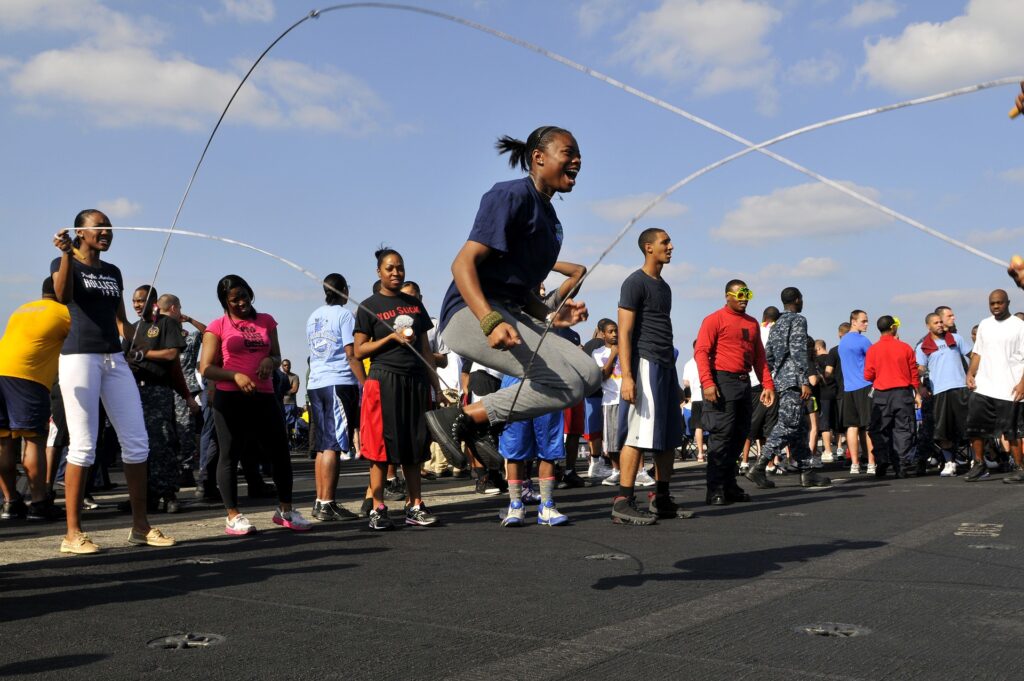
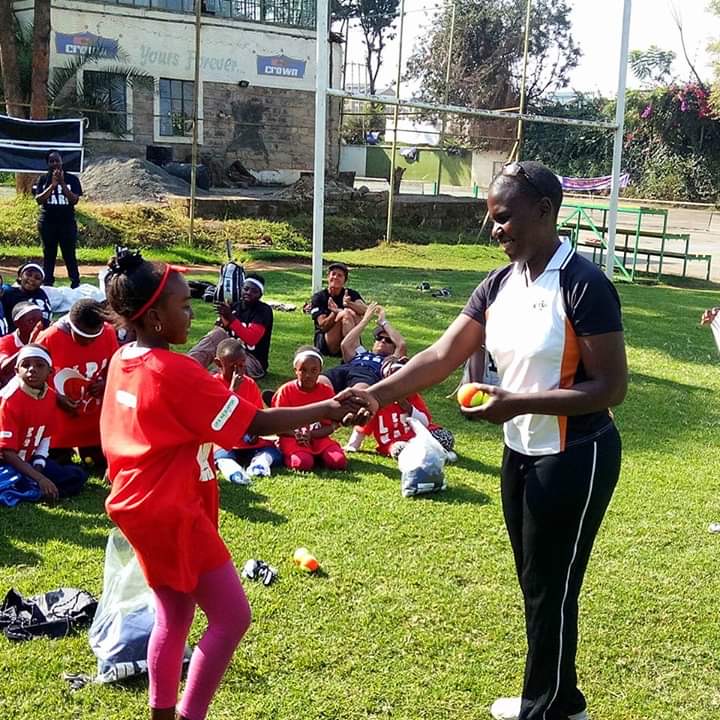
I grew up in Kisumu, a small city near Lake Victoria. The hot climate provided ample opportunity for me to play outside all day, and I was introduced to local African games like “Bladda” and “Pacho”. “Bladda” is a Kenyan game in which individuals or teams compete in creating patterns using rubber lengths from inner tubing (bladder) often recycled from old car or bicycle tires, trimmed into thin strips and tied together.

Bladda

This game, more popular amongst young girls, requires a lot dexterity, ability at high jump and precision. Pacho” is a series of obstacles that individual players must pass through in order to get “home” or “pacho”. It is often played in teams. The word “Pacho” means a traditional home amongst the Luo ethnic group. The obstacles are created by the children and can change with prevailing individual creativity. When I was 9 years old, my family moved to a middle-class estate in Langata suburbs of Nairobi, Kenya’s capital city. I felt isolated: homes were separated by fences, neighbors barely talked to one another, and children were often forbidden to step out of their compounds. I did, however, make friends with other children, whenever I went out to the local shopping center on an errand, and we secretly organized competitions for “Bladda”. I was rarely missed, I think, because my parents believed that I had the skills to take care of myself, which I learned from interacting with other children.
Read More
Share
No Comments

Girls In Sport: The Emerging Female Coach

  • eodera
  • May 22, 2020
  • #athletes, #coach, #femalecoach, #girlpower, #lizodera1, #sportanddev, #winningforgirls, #wtca, leadership

The female coach continues to be a rare occurrence, though there is recent claims of a significant increase through instituted policies by sports organisations and governments. We look at what the emerging female coaches experience when they enter the mainstream, and what is considered their biggest strength, as they take their place in teams and establish themselves.


Read More
Share
Star Focus

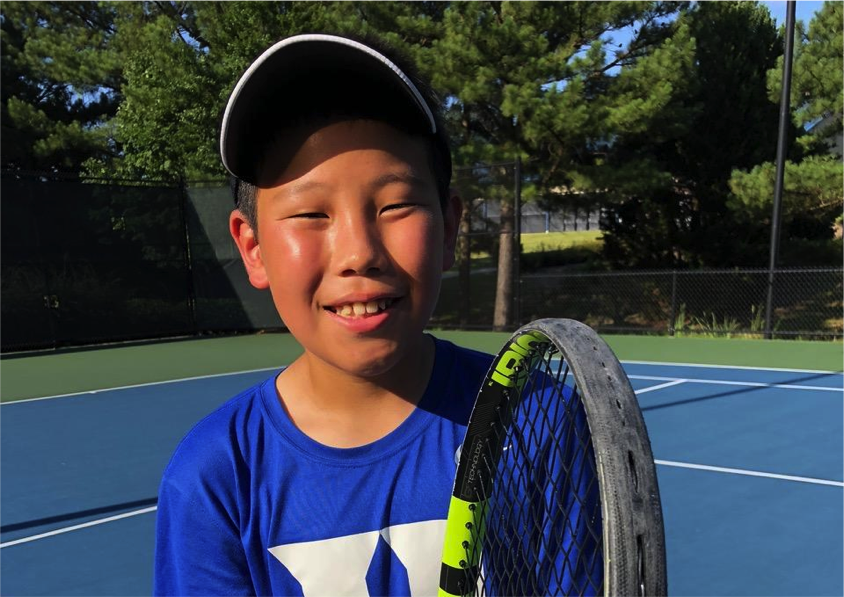
Meet Justin Kim

  • eodera
  • June 24, 2018
  • #coach, #lizodera1, #nctennis, #pmp #lizodera1, #tennis, #tennisskills, #usatennis, #usta, #wtca, tournaments

11 year old rising tennis player, Justin Kim has qualified for the North Carolina Championship Team – State Track at the USTA-Spring JTT and will play the finals on the 13-15 July 2018 at Cary Tennis Park. We interviewed Justin at practice, and here are his comments.

Question: When did you start playing tennis?

Justin: I started when I was 4 years old, having fun with Coaches Jose and Nina, at Brier Creek Country Club. but I didn’t get serious until about 8 and a half years old.

Question: What changed then?

I was playing golf a lot with my mother, Gina Lee, and my sister Jenna Kim (currently a competitive junior golfer), but I felt I wanted to be more active. I also wanted to spend more time with my dad, Charles Kim, who plays a lot of tennis. My dad would go out with me on weekends and we would hit together.  I’m really lucky that my dad knows how to string my racquets and I enjoy playing with him on court.

Question: What would you say you love most about tennis?

Justin: Winning!

Question: Great, what makes you think you could be a good competitor?

In the Fall of 2010, I won a USTA L5 singles tournament, as well as a doubles tournament in one weekend. That convinced me that I could become a really good player. After that, I started to do weekly practice at Brier Creek with Coach Chris Fletcher.

Question: How has working with Coach Liz Odera helped you?

Justin (smiling): I’m really pleased with my first serve: I used to suffer a lot in matches because my serves were very unreliable. She helped me build a powerful kick serve, and it can really hurt my opponents. She has also improved my backhand, my slice and consistency. . She encourages me to plan ahead and trust myself when playing. We prepare for every match together, and go through the results of the last match and focus on what I could use to have an advantage in a match. This has helped my become a more confident player.

Question: What are your next goals?

Justin: I hope to tryout for the varsity team at my school (Durham Academy) when I get to 7th grade, and further on, get to play for a high school team.

Read More
Share
No Comments
Leadership, Management

D For DISCIPLINE

  • eodera
  • November 8, 2017
  • #coach, #development #sporteanddev, #lifecoach, #lizodera1, #pmp #lizodera1, #strategic, leadership, responsibility

When I got my first major leadership position, I was excited about making an impact. I was put in charge of a staff of 27 members, many who had more on the job experience than my own age. I tried my best to build teamwork, prepare schedules that would suit individual strengths and programmed in individual and group training. Our performance shot up steadily and by the end of the second year, other competing units began to sit up and take notice. But even then something else was happening that would ultimately show me how much success can be dangerous to the leader.

In an effort to keep up the steady improvement in performance, I attended various seminars, where I learnt how important it was to “know your staff individually”. I took it very seriously, and deliberately assigned time to meet each member of staff regularly. I felt pleased when, after some time, I would be invited to special family activities: kids’ graduations, christenings, and birthday parties. A couple of the senior staff members, Samuel and Jonah, and I often met as members of the same club, and played football together. However, after a while, I began to notice that Samuel was coming to work increasingly late, sometimes by as much as 2 hours, while Jonah kept rarely submitted his weekly report by the Friday deadline, instead shifting it to late Mondays or Tuesdays. I requested for change verbally and eventually through a memo. They came to my office, apologized, and soon went make to their bad habits. It was beginning to affect the behavior of the rest of the staff.

Then three weeks later, for reasons that no one could gather, Samuel and Jonah could never agree on anything. I tried to bring them together, mistakenly thinking that I could broker a truce and, eventually hold the already fractured staff together. That was the biggest mistake I ever made. If I mentioned that one person was right, the other would take it that l was taking unfair sides and this would lead to resentment. There was no peace.

Eventually, both Jonah and Samuel quit their jobs in a huff and taking some of their supporters with them. I was distraught. Our results plunged for the first two quarters of the year, and it looked like the rest of the year was going to be disastrous.

I learned on valuable lesson: I may have self-discipline, but I had failed to instill discipline amongst my staff consistently, in an effort to be accepted. The fact that staff was now more familiar with me should not have meant that they could act in the disrespectful manner that they had adopted. I had lost the ability to control them.

During the next three months, I engaged new senior staff, and helped them engage the lower cadre officers for their respective sections. I also set new conditions and trained all staff on their doe of conduct. By the end of the year, we succeeded in beating our targets, and once again our unit topped the performance charts.

Here are some of lessons about discipline and leadership:

  1. Set up golden rules of behavior and stick to them. These rules will often stem from your organizations Code of Conduct or similar documents.
  2. Do not operate under two separate rules where you have discipline, yet your staff can get away with breaking expected code of behavior. Make it a practice to train your staff and then ensure that they know that you will act to discipline poor behavior. Take action immediately a staff member fails to follow the required ethic of behavior. This ensures consistent acceptable behavior modification.
  3. As a leader, you always have the option to drop undisciplined staff, and seek support to recruit and train new members. Even when you do not have direct responsibility, seek the necessary support from those in charge to support your section to act immediately.

If you wish to learn more about becoming a stronger leader, or exchange views, please write a comment below

Read More
Share
No Comments
Leadership, Management

R for Risk Assessment

  • eodera
  • October 26, 2017
  • #development, #lifecoach, #lizodera1, #pmp, #risk, #sportanddev, #strategic, leadership, responsibility

“Pato is coming!” shouted Grace as she burst into the staff break room, where her colleagues were busy having lunch and chatting quietly. Everyone turned and stared at her mutely, then John asked idly, “Is this one of you jokes? April Fool Day was 4 months ago”, John remarked doubtfully.

“No, really, I’m serious this time.” Grace looked around and sighed. Just then Peter, the Project Manager, stepped into the room smiling, “It is true, we have been asked to host a special event, to honor Patrick’s return to our community.” The atmosphere in the room lightened visibly, and everyone was jubilating with a lot of fist pumping and hand slapping. Everyone knew Patrick Masimba: he was a local hero since he got signed up for a major team in the Premier League. Now every football player want to be “Pato” as he was affectionately called. Rumors had been flying around that he was coming into the country to visit his mother, whose home was in a town about 2 miles away.

“We are lucky we have been chosen to welcome him home,” Moses piped in, and everyone nodded. “He arrives in two days” said Peter, “How much can we do within that time?” John looked at his watch quickly and said. “If Peter can agree to extend our break for another half hour, we may be able to come up with a plan.” Peter nodded and stepped back and watched as someone pulled out a paper and pen and everyone settled down quickly to thinking. John said, “I will go to the Accountant and find out how much we are able to spend on this activity.”

Ten minutes later, John stepped back and watched sadly the animated voices that filled the room. They turn in unison and he cleared is throat. “I’m sorry guys, here is all that is available to budget for this.” And the placed a sheet of paper in the center of the table. “Oh no” cried Grace, as they all leaned in, “how are we expected to make this happen? The amount you are mentioning is not nearly enough’.

Well, said Amos, the M & E Officer pushing away the notes he had been taking, and reaching out for a plain sheet of paper. Why don’t we look at the pros and cons of hosting Pato, and the best possible solution? There is always a risk to actions; we just need to work out if it’s beneficial or not. Lets do a risk assessment!”

“What does that even mean?”, Grace impatiently asked. Is it one of your M & E tests?” and everyone laughed. “Actually”, John said, taking a seat at the table, “Amos is right, its just a simple way to ensure that we are not exposing ourselves and our organization to bad surprises. Do we all agree that this is a good surprise?” Everyone nodded. Okay, then here is a list of questions that you could ask yourselves before we decide if we can go ahead and host this homecoming event”, as he quickly jotted down some points.

Here is his list:

  • Outline your organizations vision and goals
  • Make a list of what your organization does.
  • Is the proposed event in line with your organization’s goals?
  • Figure out what could go wrong if you carried out this event. Is that likely or unlikely to happen?
  • How bad would that be for your organization?
  • If likely or costly, how can you make it less likely or less costly? Is that likely or unlikely to happen?
  • How good would the event be for your organization?
  • How can you make it more likely or more helpful for your organization?

Almost one hour later, everyone agreed that it made for sense to have another local organization whose mandate was a better fit, take over the main event, only providing a small portion of the program to lend focus to their organization’s activities.

If you wish to learn more about becoming a stronger leader, or exchange views, please write a comment below

Read More
Share
No Comments

SEARCH

CATEGORIES

  • Business
  • Coach
  • Leadership
  • Management
  • Sport and Development
  • Star Focus
  • Uncategorized
  • Popular
  • Recent
  • Comments
Meet Justin Kim
June 24, 2018
0
3 Simple Actions For The Close of 2017
December 30, 2017
2
A for ACCOUNTABLE
October 12, 2017
7
Paying It Forward
October 13, 2022
0
Dexterity and Agility begins early
September 27, 2022
0
2 Reasons Why Listening Is An Important Skill When Coaching Females
January 10, 2022
0
Nyabuto Justus
Nyabuto Justus

Thanks for the piece of advice Thank you for sharing

eodera
eodera

Hahaha

eodera
eodera

Thank you! I will be posting more regularly and hope to add value for you.

RECENT POST

  • Paying It Forward October 13, 2022
  • Dexterity and Agility begins early September 27, 2022
  • 2 Reasons Why Listening Is An Important Skill When Coaching Females January 10, 2022
  • There is Every Reason To Hire A Female Coach June 8, 2021

Take advantage of my special offer to build you and your team today

Book An Appointment

RECENT POSTS

  • Paying It Forward October 13, 2022
  • Dexterity and Agility begins early September 27, 2022

CONTACT

Dr. Liz Odera

Phone: 919-641- 5164 – USA

Phone: 254-722- 729038 - KE

Email: liz@lizodera.com

© 2017 Elizabeth Odera . All rights reserved.